
Convoy
Most vehicles are designed around one driver. Most adventures aren’t.
A GM-sponsored studio project: one connected experience for friends who drive together — before the engine starts, on the road, and after everyone arrives.
Quick facts
Role
Product Designer · HMI Designer
Timeline
January – May 2026
Organization
GM Affiliated Class Project
Tools
Figma — auto layout, variants, interactive prototyping
Team: Three designers, equal contribution, partnered with General Motors
Methods: driver interview, competitive analysis, journey mapping, Figma prototyping, 3 usability tests in a 3D-printed truck cab
Deliverables: Mobile planning experience, in-vehicle command center, Convoy Host tools, driver display, post-trip memories


The trip doesn’t happen inside the truck. It moves between phones, vehicle displays, and memories—so the product couldn’t live on a single screen.
01 · The challenge
Every road trip starts in a group chat.
Before the first mile, the trip already lives in six places: the campsite link, the playlist, the “running late” text. On the road it gets worse. Drivers juggle texts, calls and maps just to stay together — inside trucks that are already connected.
02 · Who we designed for
Planning the adventure should not be harder than the adventure.
We designed for the social adventure driver: a truck owner who travels with friends and wants the truck to help the group, not become one more system to manage.
Hi! I'm John! I'm a tech bro but I care about the environment.

I go off roading with my friends all the time. We call it ‘platooning’.
John, from our driver interview. Goal: keep the group together. Friction: plans, route changes and chat all live in different apps.
03 · The pivot
We didn't start with community. Our first direction was biometric sensors.
It was technically interesting, and it was wrong. The pivot to community came from our driver interview, not a brainstorm. Cutting four weeks of work taught me the difference between impressive and needed.
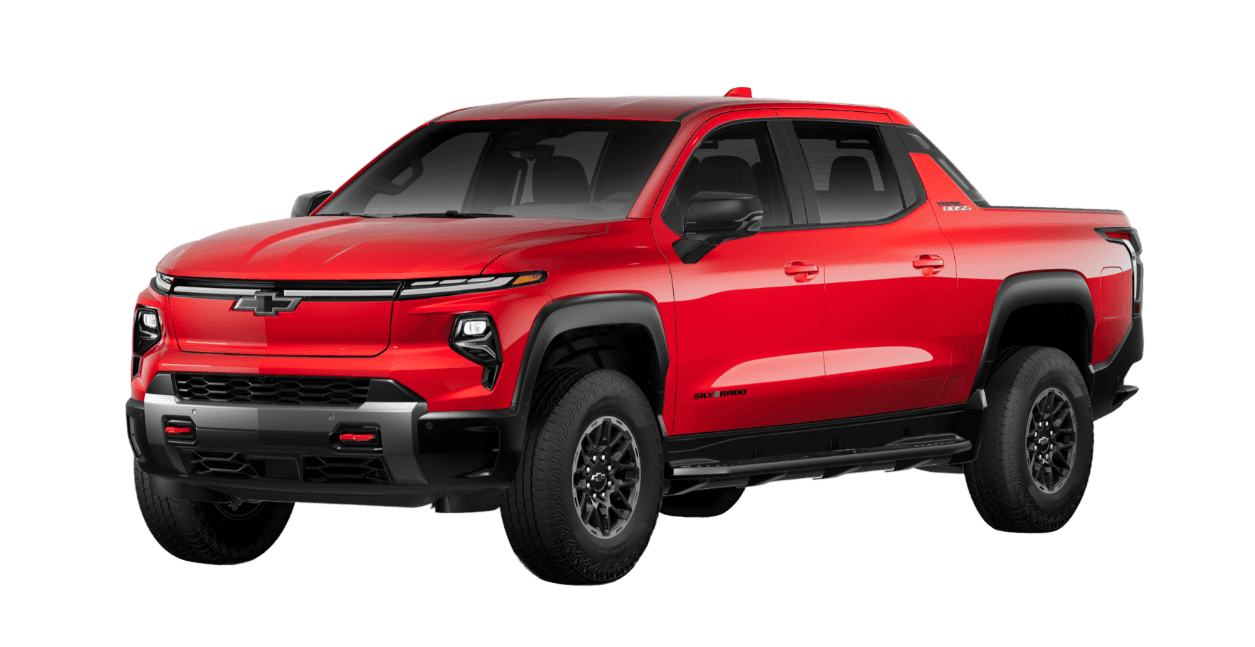
The canvas for the new direction: the 2030 Silverado EV Trail Boss.
04 · Competitive analysis
The best in-vehicle experiences solve the driver. None solve the group.

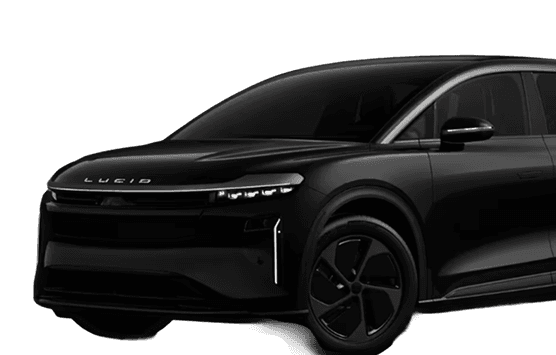

Rivian, Lucid and the Hummer EV all nail single-driver awareness. None of them help a group. Flip a card for the takeaway.
05 · The reframe
We stopped thinking about the truck. We started thinking about the weekend.
Every trip had the same three moments, so we designed around the moments instead of the dashboard.
Before the drive
Planning. Inviting friends. Choosing routes. Preparing vehicles.
During the drive
Staying together. Communicating safely. Knowing when plans change.
After the drive
Saving memories. Planning the next adventure.
06 · Early layout work
Before the interface, the blocks.
Before any visuals, we decided what each screen owed the driver and how much room it got.

Driver display, 1366×512. Navigation owns the center because it carries the glance; alerts, range and odometer sit at the edges.

Center display, 1366×1024. One expanded app plus a three-app switcher, sized by how often the group needs each one mid-drive.
07 · Before the drive
One shared plan instead of six scattered conversations.
Planning already happens on phones, so it stays there: create the trip, invite friends, check the trucks. That keeps the in-truck screen about driving.

08 · During the drive
Once the convoy starts moving, priorities change.
This is when the group needs each other most and can spare the least attention. Early layouts read like a second phone on the dash, so we cut the drive view to position, gap and convoy status — and dropped in-drive texting and map fiddling entirely.
The center display becomes a shared command center: communication shifts from phones to the vehicle.
09 · The convoy host
Every group already has an organizer. We didn't invent the role - we recognized it.
Everyone wanted to edit the plan mid-drive, which is just the group chat moved onto the dashboard. So one host owns the route and roster; everyone else sees everything and can signal, like request-a-stop. What I’d test next: does that feel organized, or bossy?
One person coordinates. Everyone benefits.
The driver’s display shows navigation, convoy status and critical alerts. Not more information — the right information, impossible to miss.
10 · After the drive
The destination isn't where the experience ends.
Most navigation disappears on arrival. Here the route becomes a shared memory, and the last trip becomes the start of the next one.
11 · Design decisions
Four decisions shaped the product. Each one traded something away.
01
Planning belongs on mobile
People already coordinate trips on their phones, so we separated preparation from driving. Tradeoff: another touchpoint. Benefit: a simpler in-vehicle experience.
02
Communication belongs inside the vehicle
Switching between apps while driving is distracting, so the vehicle becomes the safest place to coordinate the group. Tradeoff: less flexibility than messaging. Benefit: lower cognitive load while driving.
03
Groups naturally create leaders
A Convoy Host manages the experience for the group instead of treating every participant equally. Tradeoff: additional responsibility for one user. Benefit: less coordination for everyone else.
04
The journey doesn't end at arrival
Memories, shared routes, and future adventures extend the experience past the destination. Tradeoff: additional product scope. Benefit: long-term engagement.
12 · Impact
If this product existed, here's how I'd know it worked.
Why GM would build this: richer driver data, a foundation on GM Evolve, and a group feature no competitor has.
The truck wasn't the product. The shared experience around it was.
I went in designing a connected-vehicle feature. I came out asking how moments connect, not what fits on a screen.
It’s a 2030 concept, so there’s no usage data to claim. We ran 3 usability tests in a 3D-printed cab, and the final concept landed well with GM. Here’s how I’d measure it for real.
How I would evaluate success
Time required to organize a trip, coordination messages before departure, convoy completion rate, driver interaction frequency while driving, repeat convoy creation, and return trips planned with the platform. This shifts the conversation from 'Did we build it?' to 'Did it improve the experience?'
1
Data & Scalability
GM gains a richer pool of driver data, enabling the Convoy app to scale and feed future AI integrations.
2
Builds on GM Evolve
GM Evolve tech acts as the foundation — enabling future AI, in-cabin cameras, and cloud storage at scale.
3
Brand Loyalty
GM truck owners feel exclusive access to a feature no competitor has — driving friends to buy GM to join in.